
Wednesday, 13 April 2016


Tuesday, 12 April 2016


Friday, 1 April 2016
Thursday, 31 March 2016
Evaluation 2: How effective is the combination of my main product and ancilliary texts?


Deadpool was a very recent and extremely viral movie with one of the most talked about advertisement campaigns of 2015/16. The film was marketed in a range of smart and funny strategies which reflected the films own sense of humour. Firstly the film used an extremely clever advertisement which followed the conventions of a romance film, due to the film being released upon valentine's day, this targeted an audience that would not have been familiar to the film or the superhero genre and gained their interest. The marketing and advertising campaign also used a billboard featuring only emojis, something the much younger generation is familiar too and gaining their interest in a funny and creative way. The advertisement for the film was featured mostly on social media, due to the sexual themes featured within some of the ads this ensured the film gained no controversial attention by not allowing the adverts to be accessed by younger children. Deadpool followed a simple and affective campaign style, never revealing much about the film a lot of it's target audience did not know too much about the film before its release, creating excitement among the fan base. This advertising campaign didn't conform to conventional methods and used new and original ways to reach both its intended target audience and also its competing target audience. This made the film extremely popular and talked about among social media and received positive attention throughout the films entire campaign and earned $135,050,000 in the USA alone it's opening weekend.
This advertising campaign challenged many forms and conventions but managed to play on it's unique techniques and managed to gather a wider audience by doing so. In relation, with my own trailer and promotional products I have aimed to create a recognisable and original identity. I did this by challenging certain forms and conventions but ensuring my products are affective and work well together in a similar way to Deadpool, creating something original that works and would get my target audience talking and expecting a lot from the official release of the film.
Please ensure annotations are turned on for the video, pause when necessary. Annotations occur throughout the trailer also.


Thursday, 24 March 2016
Film Distribution

This was the teaser trailer released for the film. Again it reveals very little about the film in order to create excitement and promotion among the video games fans.

The films official poster also followed the same rule of not revealing too much about the film. It sticks to the theme of mysteriousness and ensures fans are kept interested prior the films release. What's interesting about this poster is that it reveals the sign that says 'welcome to silent hill'. This was not used within the first game but the usage of the sign then became a symbol of the silent hill franchise and was used in later films and games of the franchise. The poster does reveal the same type of environment that the games fans are used to. The eerie and foggy dark atmosphere that was used in the game has also been recreated in the poster. This reveals that a new character has found themselves in the same silent hill as the game. Both posters have used the same type of distressed and blurred font in order to keep them in relation to eachother and stick to the franchise.
And so came the official trailer of the film.
The film was distributed by Sony / Columbia and released April 21 2006, in 42 countries.
The worldwide gross of the film was $97,607,453.
Opening weekend the film made over $20m in the USA, shown in 2,926 screens. (credt. IMDb. Box Office mojo)
Wednesday, 23 March 2016
Evaluation 4: How did you use new media technologies in the construction and research, planning and evaluation stages?
Sources of information on web 2.0:
- https://en.wikipedia.org/wiki/Web_2.0
- http://www.webopedia.com/TERM/W/Web_2_point_0.html
Thursday, 17 March 2016

Thursday, 25 February 2016

Tuesday, 23 February 2016

Tuesday, 9 February 2016


Monday, 25 January 2016
Thursday, 24 December 2015


Wednesday, 16 December 2015
Monday, 14 December 2015
'The Few' Questionnaire and Analysis
1. What is your age group
Majority answer: 18-21Analysis: It would appear through the answers that people in there older teenage watch horror films much more than older audiences,12-17 was the nest popular showing us that there is a younger audiences for this film whereas 21+ was the lowest answer to this question,showing that 21+'s are not interested and therefore we don't have to make the film appealing to them, obviously the majority audience will influence the film certificate,This would give the film a 15 certificate,this also matches the violence in the film.
2.What is your gender?
Majority answer: FemaleAnalysis: The results show that women are more likely to watch horror films and be interested in the genre,this will affect our film and make us more likely to show more empowered female characters,Characters like the final girl. Obviously there will be no major changes because women like the genre because of what it is they don't want it changed or they wont like it. There is still a big male following of the genre and this leads me to believe that on a bigger scale the results would have shown an approximate 50/50 split. This wouldn't effect the film either way.
3.What is your occupation?
Majority answer: College StudentAnalysis: This questions answers clearly shows that people who are teens are interested in the horror genre more than adults,this further backs up the first question;therefore when making the film we would need to use popular genres with teens,zeitgeist genres would be things like sci-fi (Doctor who, Alien.) and Zombie (Walking Dead,World War z.)
4. How often do you watch horror films?
Majority answer: SometimesAnalysis:Although most of the answers were spread the highest answer was sometimes,this connotes that the audience relatively watch horror films casually and will watch a few a month therefore we wouldn't need to specialize on the film because we wouldn't need to grab the audience. Although this is the case the results were very spread out and no conclusive results could be seen,this wouldn't make a huge difference because people seem to watch more often than not.
5.What is your favorite horror film/series?
Majority answer: American Horror StoryAnalysis: This result showed the popular modern TV show American Horror Story,this connotes that audiences like to stay with the times and follow trends, therefore our film should follow suit and try to be as with the Zietgiest as possible.
6. What form of media do you use to watch horror?
Majority answer: OnlineAnalysis: It would appear this question shows that most audiences are attracted to watching there media online rather than going somewhere,this is very diverse because obviously people can watching things online on many devices,therefore we would need to make the advertisement as extensive as possible especially online where the intended audience will see them.
7.What do you most like to see in horror media?
Majority answer: PsychologicalAnalysis: Although Psychological is the most popular genre there is a general liking to everything,it seems to be that people like horror with aspects of all the horror genres,therefore when we are making our own horror film we will try to include aspects of all horror genres so we can appeal to the biggest audience possible. It would appear no one is interested in Ghost or Supernatural films so therefore we will not include those aspects in our own film
8.What are you most influenced by in horror media?
Majority answer: DirectorsAnalysis: The questionnaire results show that people are interested in the works of certain directors. For instance John Carpenter Halloween therefore we should try and take inspiration from popular mainstream directors so that the audience notice our interest in the horror genre and its directors. Closely following directors is the marketing so it would be a good idea to match something like The Women in Black or Crimson Peak that were very heavily marketed.
9.How likely would you pay to see a film about a group of teenagers trying to survive a zombie apocalypse featuring slasher like characters?
Majority answer: LikelyAnalysis: although this is the most popular answer the "unlikely" and "very unlikely" outweigh the likely answers therefore we will focus on the aspects of the film we know audiences do like rather than focus on aspects they don't therefore Maximizing our audience.
10.What do you think a zombie horror should incorporate?
Majority answer: Jump ScaresAnalysis: This was an easy to predict response because it is extremely expected of the zombie horror sub genre to include lots of jump scares although this would be acting Conventional and wouldn't be too innovative it is effective. Other popular answers that were second most popular are "Gore","Plot","Good Looking Zombies" and "Unhappy Endings" People seem to be very split when they have there preference of film this is supportive of the earlier questions saying the like there horrors to be mixed and include other aspects of other horror sub genres.
'The Few' Trailer Conventions and Ideas
WORLD WAR Z
Through analysing various Horror film Trailers, as a group, we felt that the 'World War Z' trailer possess similar conventions to which we want to emulate for our own product. First of all, similarly to our main group idea, the sub genre of this particular horror film is a Zombie Apocalypse. The main plot or synopsis of 'World war Z' starts with a miracle drug, again similar to our idea, that results in the battle and survival of what little humanity is left. The protagonist(s) is portrayed by the main character 'Gerry Lane' played by Brad Pitt fighting to save the world and more importantly the survival of his family through finding a cure.
The mood of the film shown by the trailer at first is quite calm and cheerful, shown by a family sat in their car playing a game. After this the cars wing mirror is knocked off the mood quickly changes and from then on the audience are on edge this is reinforced by a jump scare when the police officer on the motorcycle is hit full force by a lorry/van, as if to suggest the driver of the vehicle has lost control and then the chaos begins. For our Trailer for 'The Few' we want to create a similar effect, a normal and calm atmosphere mood at the beginning that builds up to the event that starts the horror, or in this case the zombie apocalypse
Through the planning of our own trailer, for background noise and music we wanted an electronic noise or beat of some sort that starts and gradually speeds up as the cross cuts become quicker and the trailer reaches its climax. The starting background music/noise in 'World War Z' is again very similar to the sort of thing we want to do, it builds the tension well and fits in well with the theme/genre, enhancing the sense of suspense and fear.
THE CRAZIES
Similarities within The Crazies regarding horror trailer conventions which we would like to use within our own trailer is first of all the narrative structure. The normal narrative structure proposed by Todorov, Equilibrium, dis-equilibrium followed by Equilibrium is the normal narrative structure for normal Hollywood films. However the narrative structure for horror films is usually the opposite where they can start and end with a disequilibrium. This is what we plan to do in our own product.
Similar to World War Z the very beginning of the trailer contains a very calm and relaxed atmosphere to begin with but increasingly becomes more and more thrilling as it contains more horror. Also The Crazies trailer contains a number of quick jump cuts, also something we plan to do in our own product as it creates tension and reveals action without spoiling too much of the film.
THE WALKING DEAD
The Walking Dead had heavily inspired our horror film and trailer idea so we decided as a group it was suitable that we used one of the season trailers. We chose season 3 of all the trailers as we felt that this season in particular reflects more similarities in the stories narrative. As the two previous horror tailors contain characters that are mostly related and are families, The Walking Dead almost contains an entirely unrelated group of survivors with the exception of a few, much alike our own product.
Watching the trailer we aim to recreate some of the shots that the trailer has used, as the action scenes containing the zombies are very similar to what we had initially planned. Looking through these trailers it was easy to spot a similarity between them all as they first begin very calm and eventually become more chaotic. Also the scenes of the environment around the characters are also a very similar attribute we want to bring to our horror trailer as it gives the audience a better understanding of the surroundings.
Thursday, 10 December 2015
Monday, 7 December 2015
Monday, 23 November 2015
History of Horror Summary
19th Century Horror
.jpg) The 19th century was as era of rapidly accelerating scientific discovery and invention, with significant development in the fields of mathematics, physics, chemistry, biology, electricity and metallurgy that laid the ground work for technological advances of the 20th century. For example through Marie Curies discoveries in chemistry she coins the term 'radioactivity' as well as Max Planck: law of black body radiation, the basis of quantum theory. A well as this the Industrial revolution began in Great Britain and spread to continental Europe, North America and Japan. The Victorian era was also notorious for the employment of children in work houses and mines as well as strict social roles including modesty and gender differences.
The 19th century was as era of rapidly accelerating scientific discovery and invention, with significant development in the fields of mathematics, physics, chemistry, biology, electricity and metallurgy that laid the ground work for technological advances of the 20th century. For example through Marie Curies discoveries in chemistry she coins the term 'radioactivity' as well as Max Planck: law of black body radiation, the basis of quantum theory. A well as this the Industrial revolution began in Great Britain and spread to continental Europe, North America and Japan. The Victorian era was also notorious for the employment of children in work houses and mines as well as strict social roles including modesty and gender differences. 
It was the 19th century that blossomed the gothic era into a genre that modern readers call horror literature. Influential works and characters that keep resonating with film and cinema today saw their genesis in such works as Mary Shelley's Frankenstein (1818), the works of Edgar Allan Poe, the works of Sheridan Le Fanu, and many more. Each of these novels created an enduring icon of horror seen in modern re-imaginings of the stage and screen.
The Silent Era
This is the era of films that did not have the technology for synchronized recorded sound or spoken dialogue.The dialogue was represented in these films by characters making physical hand gestures, through miming and title cards or what are known as 'on screen inter-titles'. This was used for narration, key dialogue and comments on the actions of the characters. Musicians were also used in accompaniment with the silent films to help portray the mood/atmosphere. This was from 1894-1920.
At first it was the USA, Italy and France that were home to the biggest names within the film industry but due to the devastation in France and Italy during WW2 America took advantage and began patenting technology for film making. Eventually between 1907 and 1913 production companies moved to Los Angeles and Hollywood was born. This then led to German Expressionism, this refers to a series of silent movies that was influenced by art movements of the time relating to both expressionism and constructivism. Much like many silent films, characters were represented through misenscene and exaggerated facial expressions and body language.
Monsters and Mad Scientists
The rebirth of horror in the 1930s allowed for movies with synchronized sound and dialogue to enter a new dimension of fear factor, making the films come to life and become more realistic than ever before. Examples of monsters and mad scientist films of this decade include:- Frankenstein
- King Kong
- Dracula
- The Mummy
 In the 1930s scientific discoveries were advancing at a rapid pace which meant these types of film kept in theme with this time. For example, Frankenstein is about a scientist that creates his own monster. The scientists within these films are portrayed as insane and power hungry but many plots were based on future scientific predictions. The truth is stranger than fiction.
Also during the 1930s was the great depression, this led to the increase of popularity in horror films as a form as escapism entertainment. These horror films were then known as the sub genre of 'supernatural' which would allow the audience to escape and forget about their problems for a short while.
The Primal Animal
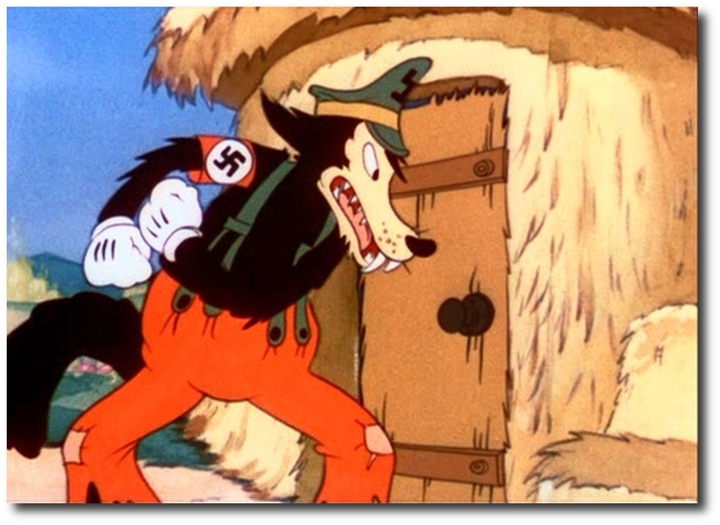 The 1940's were host to WW2 which became a large factor in shaping some of the changes that developed the horror genre during this period. With horror being banned in Britain, American film makers then took the opportunity to completely take over the horror genre. 'The Wolf' then became a key icon of this time, due to the referencing by Hitler of the Nazis as wolves and Adolf in old German meaning wolf. Propagandists even used this to depict Hitler himself as the Big Bad Wolf of fairy tales. It seemed the wolf represented the predators hidden in the corners of public consciousness. This being the reason for the Universal home of the monsters during the 30s picked the wolf as the prime menace for the late 30s and early 40s.
The film 'The Wolf Man' was released in 1941 written by Curt Sidomak, a man who fled the Nazis himself in 1937. This then gave birth to the Hollywood phenomenon known as 'Werewolf' and then formed the cliche icons that we still enforce today such as full moons and silver bullets. The Wolf Man is one of Universals top-tier monsters without a literacy source.
1941 also brought the release of 'Cat People', a psychological thriller that had a different take than the one 'The Wolf Man' took. It was a great success making a profit of $4 million off of their original $134k budget. The theme of the film was based on women being portrayed as dangerous, aggressive creatures. This may relate to how women were treated after the war. When the men returned women were laid off from their jobs in order to give them back to the men.
Mutant Creatures and Alien Invaders
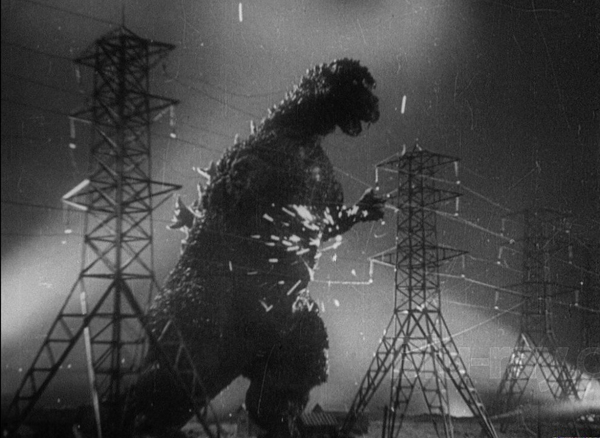 One of the first mutant movies to be created was the iconic Godzilla. Godzilla was produced in the 1950s by Tomoyuki Tanaka. Since the original in 1954 there have been various remakes and sequels of the Godzilla franchise with the latest remake of the film being in 2014. Today godzilla is known univerally as one of the most popular and leading mutant movies ever created. Flight to Mars was also released in 1951, which was based on an american science expedition to mars only to discover it is inhabited by an underground dwelling Aliens.
During the 1950s radio active weapons and atomic bombs were in commission. As well as this, NASA were able to explore more of space than ever with the advance in technology and discoveries. these events within this decade could have potentially impacted the mutant and alien genre. Because horror films of this period kept to the same central theme it may have created another dimension of fear for the audience. If they were aware of these advances in science and technology of the time it would have made these horror films seem a lot more realistic and the thought of the unknown moving into the known. For example, what we might find in space or what atomic bombs and radio active energy could create, like monsters.
Ghosts, Zombies and Satanism
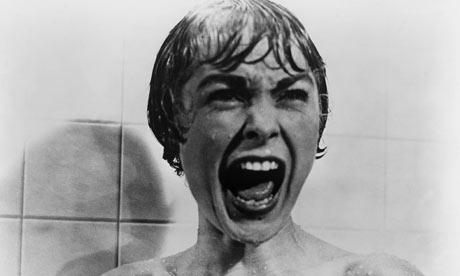 1970 horror reflected psychological fears, One of the recurring fears being children and the fear of child birth. Psycho is a good example as it portrays psychological issues the killer is Norman Bates, a peculiar young man who has been dominated by his invalid mother all of his life. this psychological torment creates a cold blooded killer. One of the most prominent films in horror to do with children was The Exorcist. This film was actually banned in Britain until 1999 and was voted as the scariest film of all time. These types of horror had a particularly strong effect due to them using children who would at the time be seen as very innocent and harmless. But through the film were transformed into evil conduits for demonic spirits who possess and control. Satanism then becomes the source of the audiences fear, by portraying to the audience that evil can be found all around them. Examples of such films include:
- Psycho (1960)
- Night of the Living Dead (1968)
- The Exorcist (1974)
- Carnival of Souls (1962)

Hammer Horror
 The British film production company created Hammer Film productions and was founded on the 5th of November in 1934 by William Hinds whose stage name was William Hammer. The company were best known for a series of Gothic horror films that were produced in the mid 1950s to 70s. Although they covered other genres of film, during their more successful years they dominated the horror film market by competitors and the loss of american funding forced changes for the previously successful hammer productions and led to the companies bankruptcy in the mid 1980s.
Since 2008 the company has been resold to a media tycoon known as John de Mol who planned to spend $50 million on a new series of horror films. This reopening then led to the production of such films as Let Me In (2010) The President (2011) and The Women in Black (2012).
Slasher Movies & Body Horror
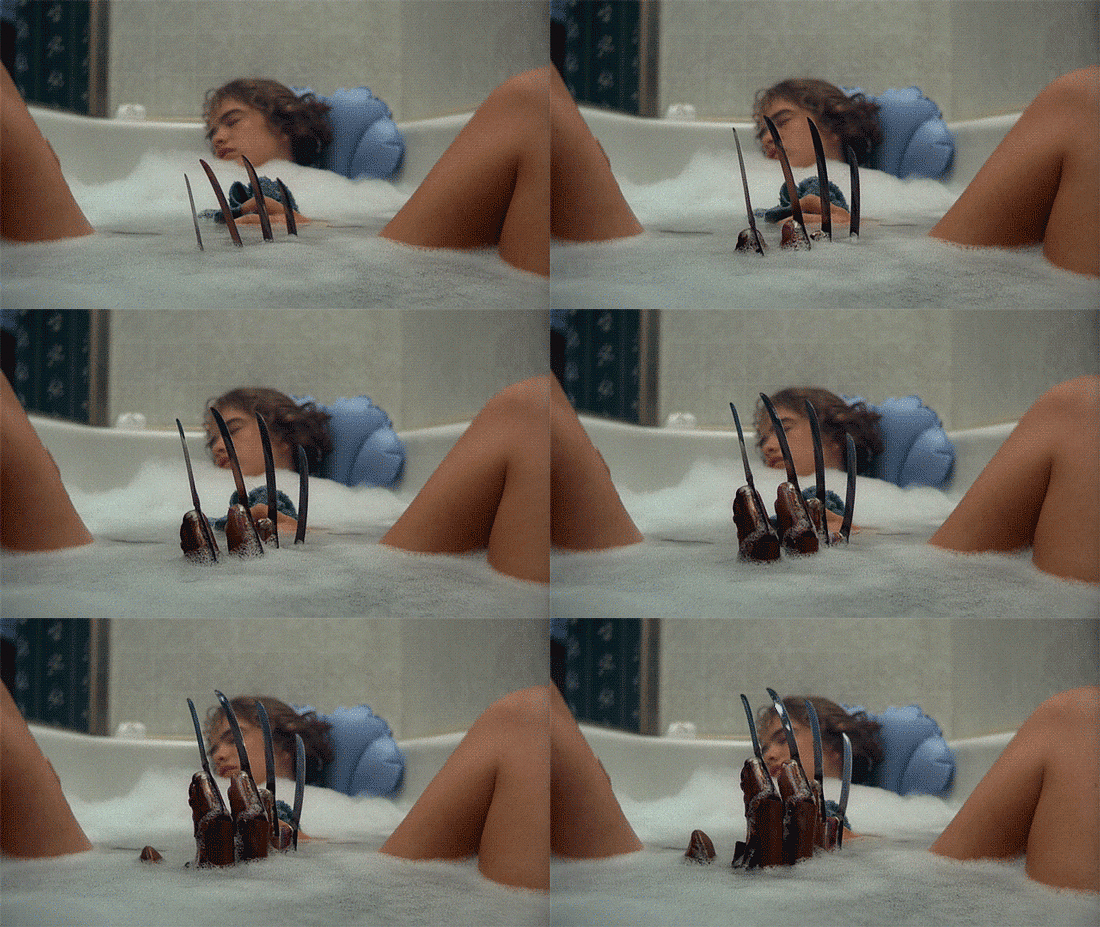
- Friday the 13th (1980)
- A Nightmare on Elm Street (1984)
- The Slumber Party Massacre (1982)
- The Prowler (1980)
- Halloween (1981)
Video Nasties
In the 1980s, Video Nasties that presented a range of body mutilations, cannibalism, gang rape and many other disturbing and controversial themes. This is what led to the conservative MP, Graham Bright bringing forward the Private Members Bill that was passed as the Video Recordings Act (VRA) 30 years ago. Giving statutory power to the British Board of Film Classification (BBFC). The act made it illegal to sell or supply any video that the board had not approved.
Video Nasties were bloody accidents that were distributed on tape and were available to view repeatedly by anyone with access to a VCR. This led to the mockery of the ratings system, and it quickly became apparent that relatively young children could have been exposed to controversially gory scenes which included things such as eye gouging, fingernail pulling etc. In the UK this led to the notorious 'Video Nasty Debate' as the tabloid press screamed with headlines creating moral panic.


Ironic Horror
The 90s were home to the ironic horror films, this simply mean they were aware of themselves. This means that they involve the use of horror parodies and are aware of the codes and conventions of the stereotypical horror genre.
 Wes Craven's Scream (1996) is a horror film that is often celebrated for its willingness to portray characters who we have seen in horror films. It is credited for reviving the horror genre after a string of disappointing sequels and direct-to-videos releases in the 80s and 90s which left many fans and critics to believe that once creative and lucrative genre was dead. The film wound up the highest grossing slasher film of all time earning $170 million worldwide.
 To call scream original is perhaps misleading, though many critics and fans admire craven for creating an all new genre, the film itself is arguably ironically original for owning its unoriginality. Much of the film contains textual references to horror and these allusions give the film a post-modern self awareness.
Gore-nography and Torture Porn
The term torture porn was coined by David Edelstein in January 2006 and suggested we all engage in this type of film on a purely visceral level (relating to deep inward feeling) - all conditions of story and character aside. This suggests that as an audience we consume this type of media for physical reaction rather than an emotional one, much like porn itself.
 In the 2000s, many films were released containing a lot of controversially graphic scenes of torture. Although this was not new to film, the way it was being portrayed with the technology available made them appear more realistic than ever which shocked its audiences. Global news revealed the US army has been accused of torturing their prisoners, which now made this topic seem realistic and topical.
Horror films of this decade were striving for aesthetic realism, designed not to look comical like many before them, but to look as realistic as possible. Details in every scene so nothing is left to the imagination, they are subject to every gory scene.
 One of the first pioneers of Torture Porn was Eli Roth. His first feature film, Cabin Fever, released in 2002, involved a flesh eating virus attacking a group of teen college graduates. One scene consists of a girl shaving her leg only to realise she is shaving her own skin.
However, in 2007, a film called 'Captivity' which was about a girl who is tortured displayed very graphical posters that were criticised and accused of 'crossing a line' in horror. As a result, the posters were then taken down and the film flopped.
Although Toture Porn made it into several popular budget movies and TV shows, the demand for it might be argued to have fizzled out by the end of the decade. Such films include:
Although Toture Porn made it into several popular budget movies and TV shows, the demand for it might be argued to have fizzled out by the end of the decade. Such films include:
- Saw (2004)
- Hostel (2005)
- Wolf Creek (2005)
- Hotel II (2007)
Subscribe to:
Comments (Atom)